
Moving to Germany without learning German can make everyday communication, work, studies, healthcare, and official tasks more difficult. While English is commonly used in some workplaces and cities, German is important for handling daily life independently and building stronger social and professional connections.
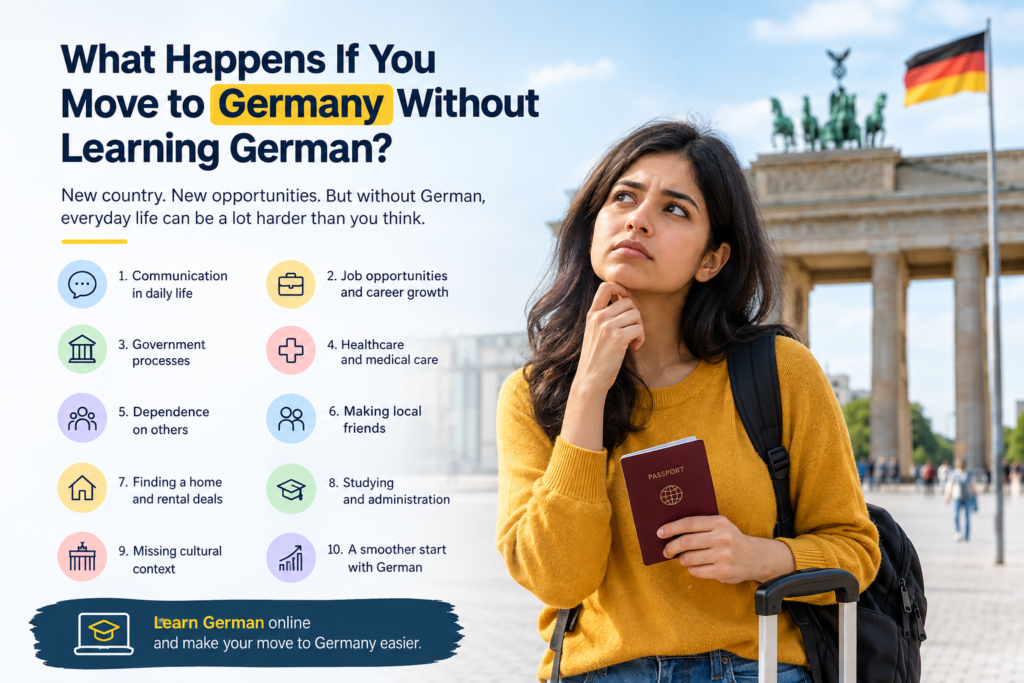
10 Realities of Moving to Germany Without German
- Daily Communication Becomes Difficult – Shopping, ordering food, speaking with neighbours, or asking for directions can be challenging when you cannot communicate in German.
- Finding a Job Can Be Harder – Many German employers expect employees to communicate with colleagues and customers in German. Depending on the industry and role, German language skills can significantly expand your job opportunities.
- Government Processes May Feel Complicated – Registration, residence permits, tax-related matters, and other official processes may involve German documents and communication. Understanding basic German can make these tasks easier.
- Healthcare Communication Can Be Challenging – Explaining symptoms, understanding medical instructions, and communicating with doctors or pharmacies can be difficult without German, particularly outside international hospitals and major cities.
- You May Depend More on Others – Without German skills, you may frequently need help from friends, colleagues, translation apps, or English-speaking staff for everyday situations.
- Making Local Friends Can Take More Effort – English can help you meet international communities, but learning German makes it easier to communicate with local people and participate in German-speaking social activities.
- Housing Searches Can Become Difficult – Rental listings, landlord communication, contracts, and apartment-related discussions may be primarily in German. Basic German speaking and reading skills can help you understand important information.
- Studying Can Be More Challenging – International programs may be taught in English, but German can still be useful for university administration, part-time jobs, accommodation, and everyday communication.
Must Read – Common Mistakes to Avoid When Joining an Online German Course
- You May Miss Cultural Context – Learning German helps you understand local expressions, workplace communication, social etiquette, and everyday German culture beyond what translation tools can provide.
- Learning German Before Moving Gives You a Head Start – You do not necessarily need to be fluent before moving. Starting with A1 German and progressing through A2, B1, and beyond can make your transition smoother. An online German course lets you build your language skills before relocating. If you have a busy schedule, you can learn German course online through live classes, recordings, practice materials, and structured lessons.
You can move to Germany without knowing German, but learning the language beforehand can make your transition easier. Even basic German can help with jobs, accommodation, healthcare, government services, daily conversations, and social integration.
If Germany is your study, work, or relocation destination, starting an online German course before you move can help you develop practical language skills at your own pace.